What Are Neighborhood Ads?
Neighborhood ads are hyperlocal digital campaigns that reach people who live, shop, or spend time near your business. Learn how they work, why they’re so effective, and how small businesses can start advertising locally for as little as $5 a day.

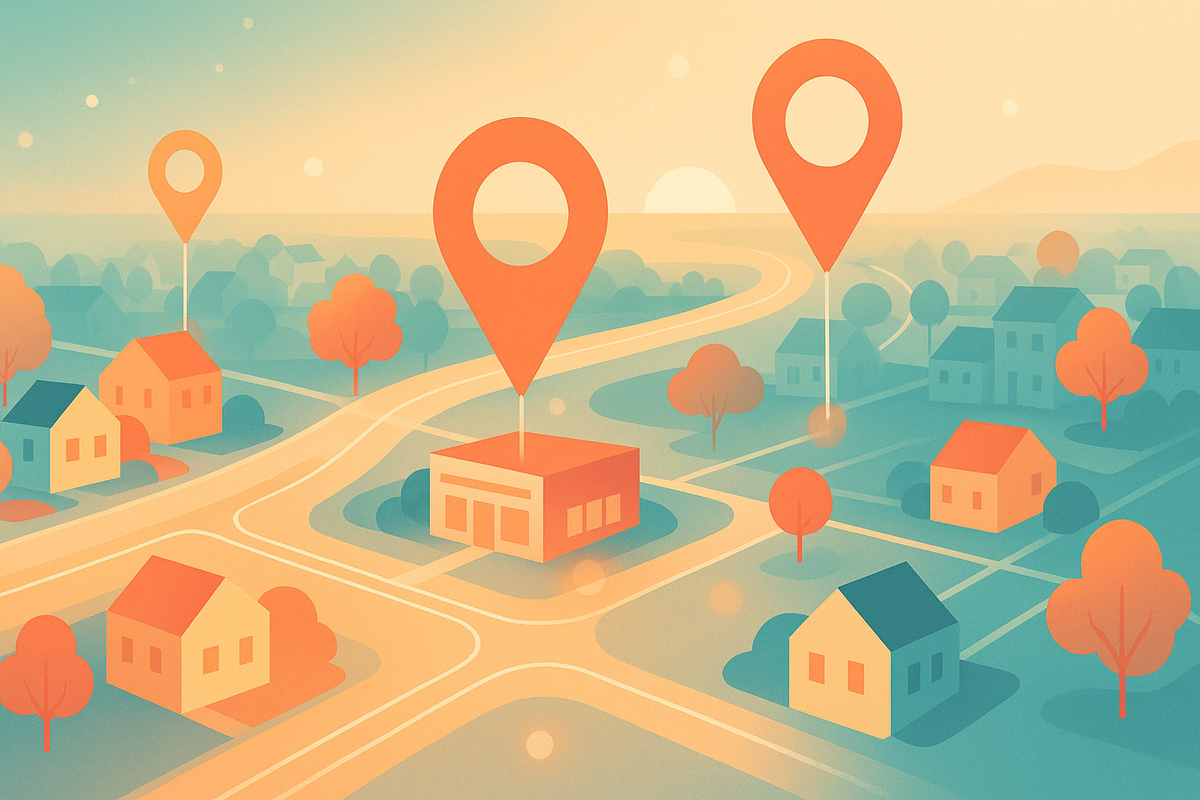
If you run a local business, you know how hard it can be to reach the right people — the ones actually nearby, not scattered across the state.
That’s exactly what Neighborhood Ads are designed to do.
They combine the targeting precision of digital marketing with the familiarity of local community outreach, showing your ads to people based on where they live, visit, and spend their time.
As Harvard Business Review explains, brands that connect with people in their local communities tend to earn higher trust and engagement.
In this guide, we’ll explain what neighborhood ads are, how they work, and why they’re becoming one of the most effective forms of local advertising for small businesses.
What Are Neighborhood Ads?
Neighborhood ads are digital display or video campaigns that target audiences within specific geographic zones — often down to neighborhoods, zip codes, or even individual blocks.
Rather than using broad demographic or keyword targeting, these ads rely on real-world location data. They appear across thousands of apps and websites (like local news, weather, or lifestyle apps) when someone is physically inside your chosen area or has recently visited it.
This approach — known as geofencing marketing or hyperlocal advertising — is changing how local businesses promote themselves.
🧭 Example
- A Naples restaurant could show ads only to people in Port Royal, The Moorings, and Park Shore.
- A roofing company might advertise in neighborhoods recently affected by storms.
- A boutique could reach shoppers within a 5-mile radius of its store.
In each case, the advertiser isn’t shouting to an entire city — they’re simply showing up in the right neighborhoods.
How Neighborhood Ads Work
Here’s how the process looks on a platform like HeyNeighbor:
- Choose Your Neighborhoods
Select the neighborhoods, zip codes, or custom map areas where you want to show your ads. - Build Your Audience
The platform identifies mobile devices that live in or frequently visit those areas. - Launch Your Ads
Your display or video creatives appear across top websites and apps used by that audience. - Measure Real Results
Track metrics such as Ad Views, Clicks, Visits, and Customer Actions to see how your campaign performs.
Why Neighborhood Ads Work So Well
Neighborhood ads outperform many traditional channels because they connect location, relevance, and intent.
According to HubSpot’s hyperlocal marketing guide, local relevance drives stronger recall and higher click-through rates — especially when ads align with people’s surroundings.
🎯 Precision Targeting
Reach the exact neighborhoods where your ideal customers live — no wasted impressions.
💬 Local Relevance
Ads feel familiar and trustworthy when tied to nearby places people recognize.
💰 Affordable Reach
Start for as little as $5/day — perfect for local businesses or seasonal campaigns.
📍 Real-World Visibility
Stay top-of-mind with nearby customers who are most likely to visit or call.
📊 Measurable ROI
Track clicks, site visits, and even in-person store visits — something print or radio can’t offer.
| Feature | Neighborhood Ads | Google Ads | Facebook/Instagram Ads |
|---|---|---|---|
| Primary Targeting | Real-world geography (geofencing) | Keyword or search intent | Demographics & interests |
| Best For | Reaching people near your business | Capturing active searchers | Building awareness via social |
| Ad Placement | Display & video on local sites/apps | Search results & partner sites | Feeds & stories |
| Audience Control | Pinpoint neighborhoods or custom map zones | Broader by radius or city | Based on user data |
| Tracking | Views, clicks, store visits | Clicks, conversions | Clicks, engagements |
| Budget Flexibility | Starts ~ $5/day | Typically higher | Typically higher |
Neighborhood ads don’t replace Google or Facebook — they complement them by filling the local awareness gap between “never heard of you” and “ready to buy.”
Who Should Use Neighborhood Ads?
They’re a natural fit for businesses that depend on local customers, including:
- Restaurants, cafes, and coffee shops
- Home service providers (HVAC, electricians, landscapers, roofers)
- Realtors and property managers
- Retail stores and boutiques
- Healthcare and wellness offices
- Churches, charities, and community events
If you serve a local area, neighborhood ads help you stay visible where it matters most — right in your own backyard.
Real-World Example
Bloom Digital Creatives – Naples, FL
This local marketing studio ran a neighborhood campaign targeting business districts within a 5-mile radius. In 30 days, they reached 9,000 verified local viewers and gained multiple new client inquiries — all for under $100 total spend.
That’s hyperlocal efficiency in action.
How to Start
Platforms like HeyNeighbor make launching your first campaign easy:
- Pick your neighborhoods
- Upload your logo and ad creative (or use pre-built templates)
- Set your budget — as low as $5/day
- Launch and monitor performance
No agency fees, no complex dashboards — just local exposure where it counts.
FAQs About Neighborhood Ads
1. What’s the difference between neighborhood ads and Google Ads?
Google Ads target people searching for something. Neighborhood ads target people living or visiting a specific area. The two work best together: one drives awareness, the other captures intent.
2. How much do neighborhood ads cost?
Most campaigns start around $5–$10 per day, depending on audience size and ad format.
3. Do they actually work for small businesses?
Yes. Neighborhood ads are built specifically for small and mid-sized local businesses. You can see measurable traffic, visits, and leads — often at a fraction of the cost of print or social media ads.
4. What types of ads can I run?
Static display, animated, or short video ads are most common. The key is to keep visuals clean, local, and brand-consistent.
5. Can I track visits or calls from my ads?
Yes. Platforms like HeyNeighbor provide detailed reporting on Ad Views, Visits, and Customer Actions, helping you see the direct impact of your campaigns.
Conclusion
Neighborhood ads give small businesses a smarter way to advertise — one that’s personal, precise, and proven.
Instead of wasting budget reaching people across an entire city, you can focus on the exact neighborhoods where your best customers live.
It’s affordable, trackable, and rooted in what makes local marketing work: community connection.
So the next time someone nearby checks the weather or reads local news, your business could be right there — reminding them you’re part of their neighborhood.